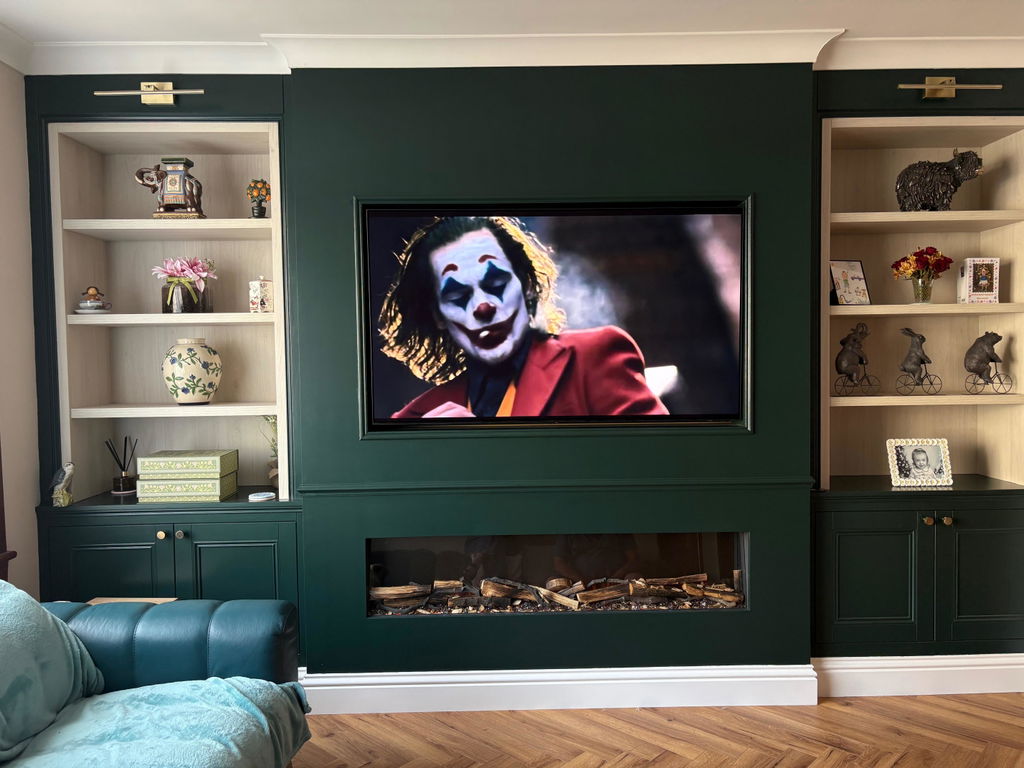
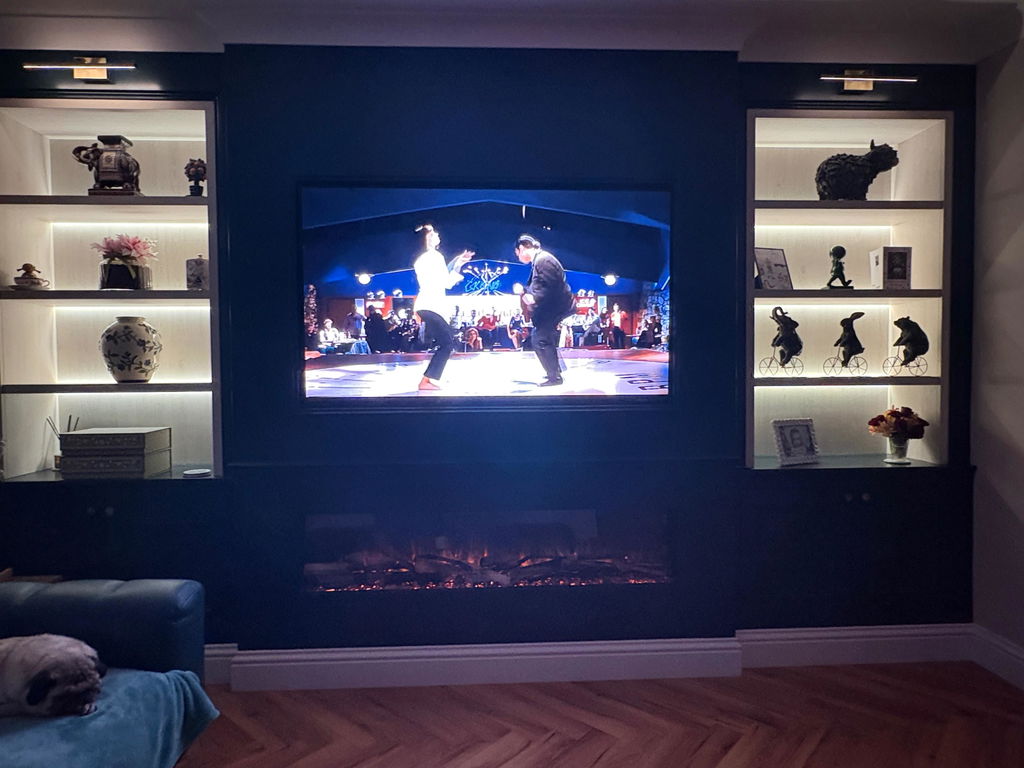
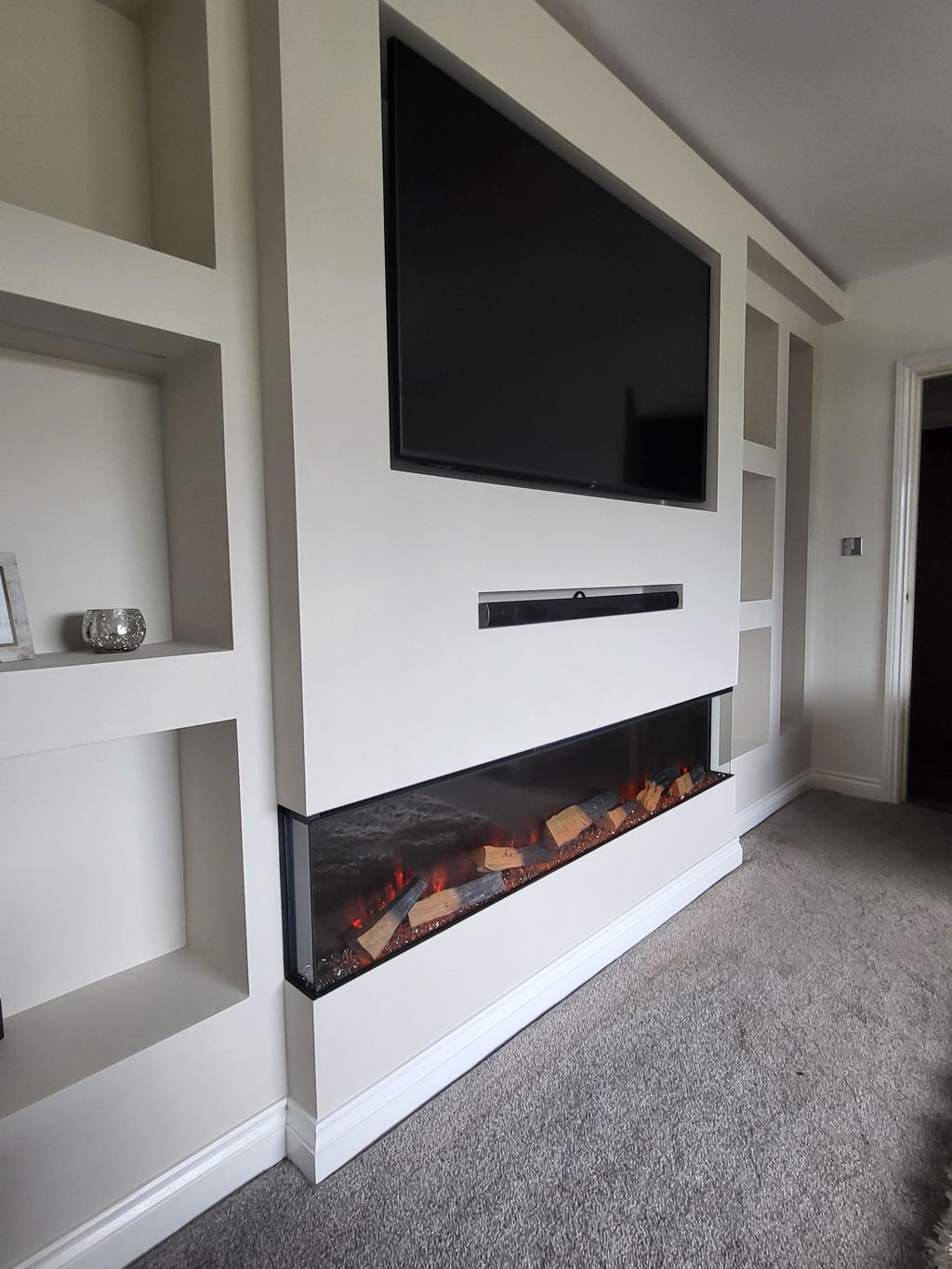
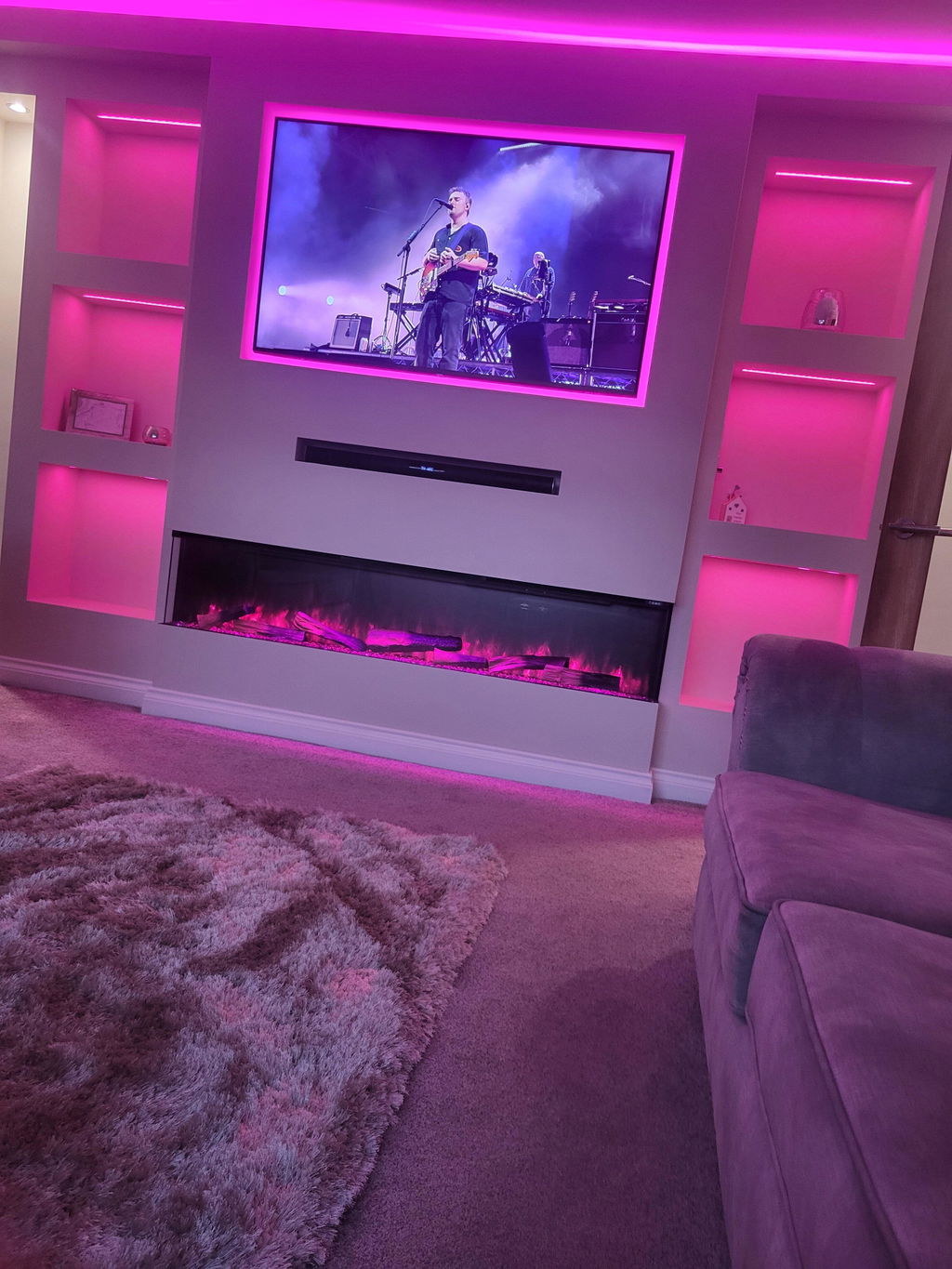
A media wall can look simple once it is finished, but choosing the right electric fire is the decision that shapes the whole build. Its width, installation depth, viewing style and manufacturer requirements all affect the finished wall.
This guide helps you plan the important parts before you buy. It is written for anyone building a stud-wall feature, false chimney breast or purpose-built media wall in the UK.
Start here: browse our media wall electric fires, then use this guide to narrow the style and size that suit your room.
What is a media wall electric fire?
A media wall electric fire is designed to sit within a purpose-built surround rather than simply against a wall. Most are electric and flueless, so they do not need a chimney. They are commonly installed below a television, with the wall built around the fire to create a single focal point.
That does not mean every electric fire has the same fitting requirements. Overall dimensions, recess depth, ventilation, clearances and access all vary by model. The exact product manual is the instruction that matters for your installation.
How wide should a media wall fire be?
Choose the fire as part of the whole wall composition. A very small fire beneath a wide TV can make the wall look top-heavy; an oversized fire can leave too little room for shelves, speakers or side features.
- 50-inch class: often suits narrower feature walls and smaller rooms.
- 60-inch class: a flexible middle ground for many living rooms.
- 71-inch class: suits wider walls and larger televisions.
- 80-inch class and above: makes the strongest visual statement where the wall has the width to carry it.
Use the manufacturer’s actual overall width, not a size label alone: quoted “inch” sizes can refer to a product range rather than an identical visible opening.
Read our media wall fire sizing guide.
Depth: the measurement that can change the whole build
Width gets the attention, but depth often determines the construction. You need to allow for the fire’s body, its required recess/opening, cable routing and the finished face of the wall. A shallower unit may make a slimmer build possible; a deeper flame bed can require a larger projection into the room.
The Slimline Panoramic 3D range is an example of a shallow-build option, available in 50, 60, 71 and 80-inch sizes. Its suitability still needs confirming against the selected size’s current instructions before building begins.
Read our electric fire depth guide.
More media wall planning guides
- How wide should a media wall fire be?
- What depth does a media wall need?
- 1-sided vs 2-sided vs 3-sided media wall fires
- Can you put a TV above an electric fire?
- 7 media wall mistakes to avoid before you build
Featured media wall electric fires
These four examples show the different directions you can take. Use the product page and current manufacturer instructions for the exact size and installation requirements before finalising your build.


1-sided, 2-sided or 3-sided: which style suits the room?
1-sided fires show the flame only from the front and can give the cleanest, most minimal look. 2-sided and 3-sided fires reveal the flame through side glass as well, creating a wider visual effect. They can look particularly good when the edges of the fire are visible from seating positions around the room.
Choose the viewing style around your sightlines, not just the product image. Where the fire will be framed tightly by furniture or cabinetry, a front-facing design can be the stronger choice.
Compare 1-sided, 2-sided and 3-sided media wall fires.
Can you put a TV above an electric fire?
Many media walls are designed that way, but the answer is model-specific. Never use a generic clearance measurement copied from another fire. Check the selected fire’s manual for its requirements, plan the television mounting independently, and make sure heat, ventilation, power and future access are all considered before the wall is closed.
A soundbar, concealed sockets and cable routes should be decided at the same stage. A neat wall is only practical if essential components remain reachable later.
Read our TV-above-an-electric-fire guide.
Media wall planning checklist
- Choose the exact fire and size before the framework is finalised.
- Download and read the current manufacturer manual for that exact model and size.
- Confirm overall dimensions, opening/recess requirements and required clearances.
- Plan the finished wall depth, not only the stud depth.
- Agree power, cable routes, TV position, ventilation and access with a suitably qualified installer.
- Inspect and test the fire before it is enclosed.
- Do not book in non-refundable installation work until the product has arrived and its details have been checked.
Which media wall fire is right for you?
If you are planning a compact build, start with the slimline electric fire range. For a broader flame view, explore 3-sided media wall electric fires. For a clean front-only look, browse our full media wall electric fire collection and compare the product drawings and manuals.
Still undecided? Send us a room photo, your proposed wall width and the product links you are considering. We can help you compare the products, but your installer should always confirm the final construction and fitting requirements.
Frequently asked questions
Do media wall electric fires need a chimney?
No. Electric media wall fires are flueless, but they still have model-specific installation requirements.
Are shallow fires always easier to install?
They can reduce the wall projection, but “easier” depends on the exact opening, clearances, wiring and construction. Check the manual for the exact chosen model.
Should I choose the TV or fire first?
Choose them together, but fix the fire specification first. Its size and fitting requirements determine the opening and much of the wall construction.
0 comments